Chips, cracks, etch marks, stains and worn finishes can often be assessed for repair before replacement is considered. The right method depends on the material, the depth of the damage and whether the surface or its support is still moving.
Total Grind N Polish repairs and restores natural stone and works on concrete benchtops across the Gold Coast, Brisbane and the other service areas listed on this site.
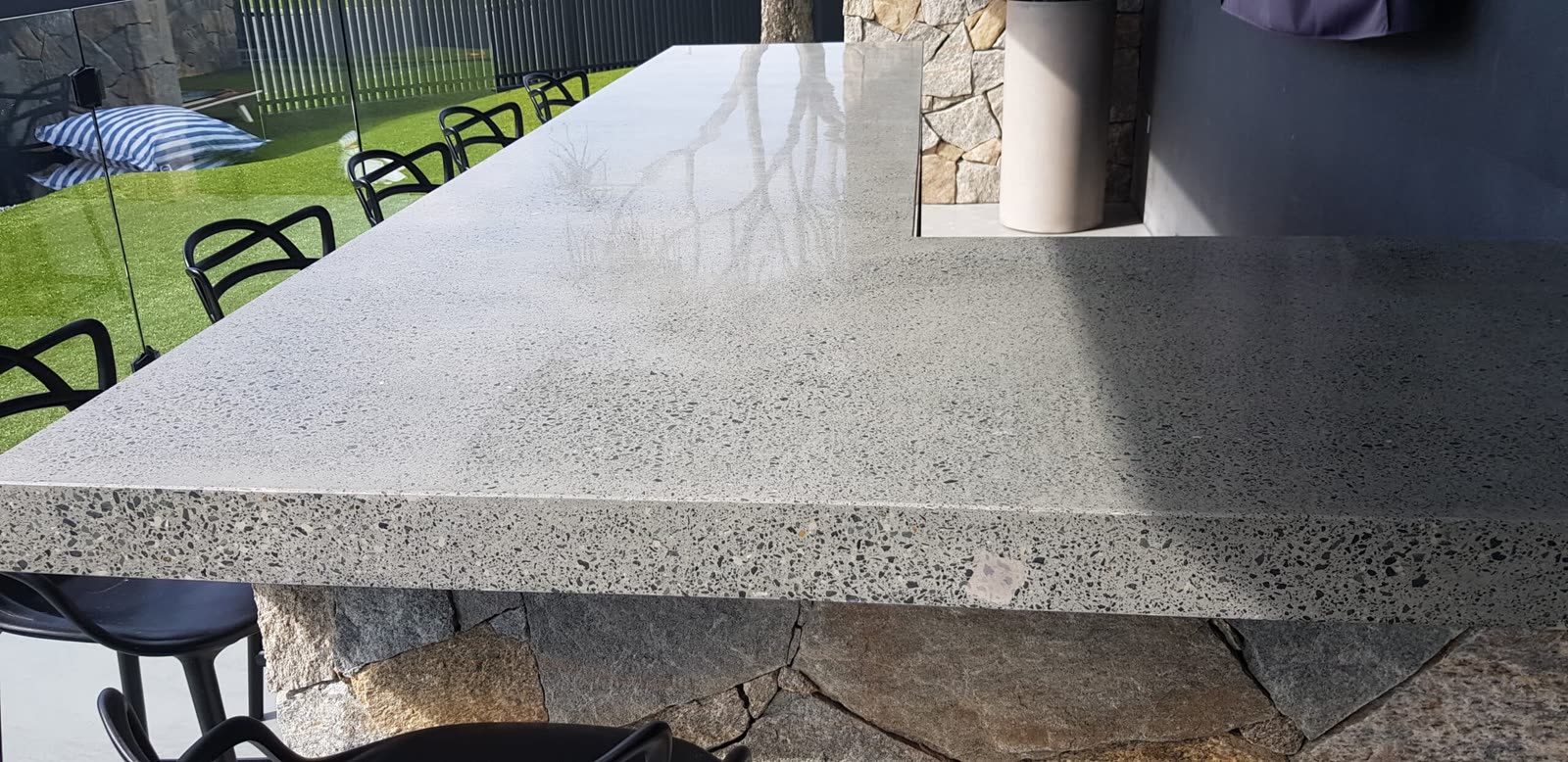
Chips and edge damage
Stone chips can be filled with colour-matched resin and pigments, then cut back flush and refinished to suit the surrounding surface. Concrete repair materials are selected for the substrate and damage. The final visibility depends on the material, its pattern, the location of the damage and the light across the surface.
Cracks
A crack should be assessed before it is filled. Its width, location, movement and the support beneath the top all affect whether an in-place repair is appropriate. A stable surface crack is a different job from a crack caused by movement or failed support.
Etch marks and worn stone
Marble, limestone and travertine can develop dull marks after contact with acidic products. These marks are damage to the surface rather than dirt sitting on it. After the stone is identified, progressive diamond pads can be used to hone the affected surface and restore a honed or polished finish.
Dull rings on calcite-based stone may be etching, but the material and mark must be identified before treatment. Scratches and worn areas are assessed in the same way: the surrounding finish determines how much of the surface needs to be refinished.
Stains
Stains and etches are different problems. A stain has entered a porous surface; an etch has changed the surface itself. Treatment depends on the stone or concrete, the contaminant and how far it has travelled. Inspection comes before a repair promise.
Sealing after repair
An impregnating sealer suited to the material may be applied after repair and refinishing. Resealing intervals depend on the surface, product, cleaning routine and use. The job-specific care guide should set the inspection and maintenance interval rather than a fixed rule for every benchtop.
Repair or replace?
Surface chips, scratches, etches, stains and some cracks may suit repair. Replacement may be the better option where the top is structurally broken, support is inadequate or movement is likely to reopen the damage. Total Grind assesses the surface before confirming a method and scope.
What a repair assessment covers
- Identify the material and existing finish.
- Record the damage, movement and surrounding support.
- Select the repair and refinishing method.
- Confirm the likely visibility of the finished repair.
- Set sealing, cure and care requirements for that system.
Visit count depends on the material, damage, repair system and cure time. Dust extraction is used with the grinding and honing equipment described on the About page.
Engineered stone
Engineered-stone chips, burns and edge damage are assessed case by case. Full-surface refinishing is more limited than it is for many natural stones, so the achievable result should be agreed before work starts.
Get a benchtop assessment
Read the relevant service page, then contact Total Grind N Polish with the location, approximate dimensions and a few photos of the surface.