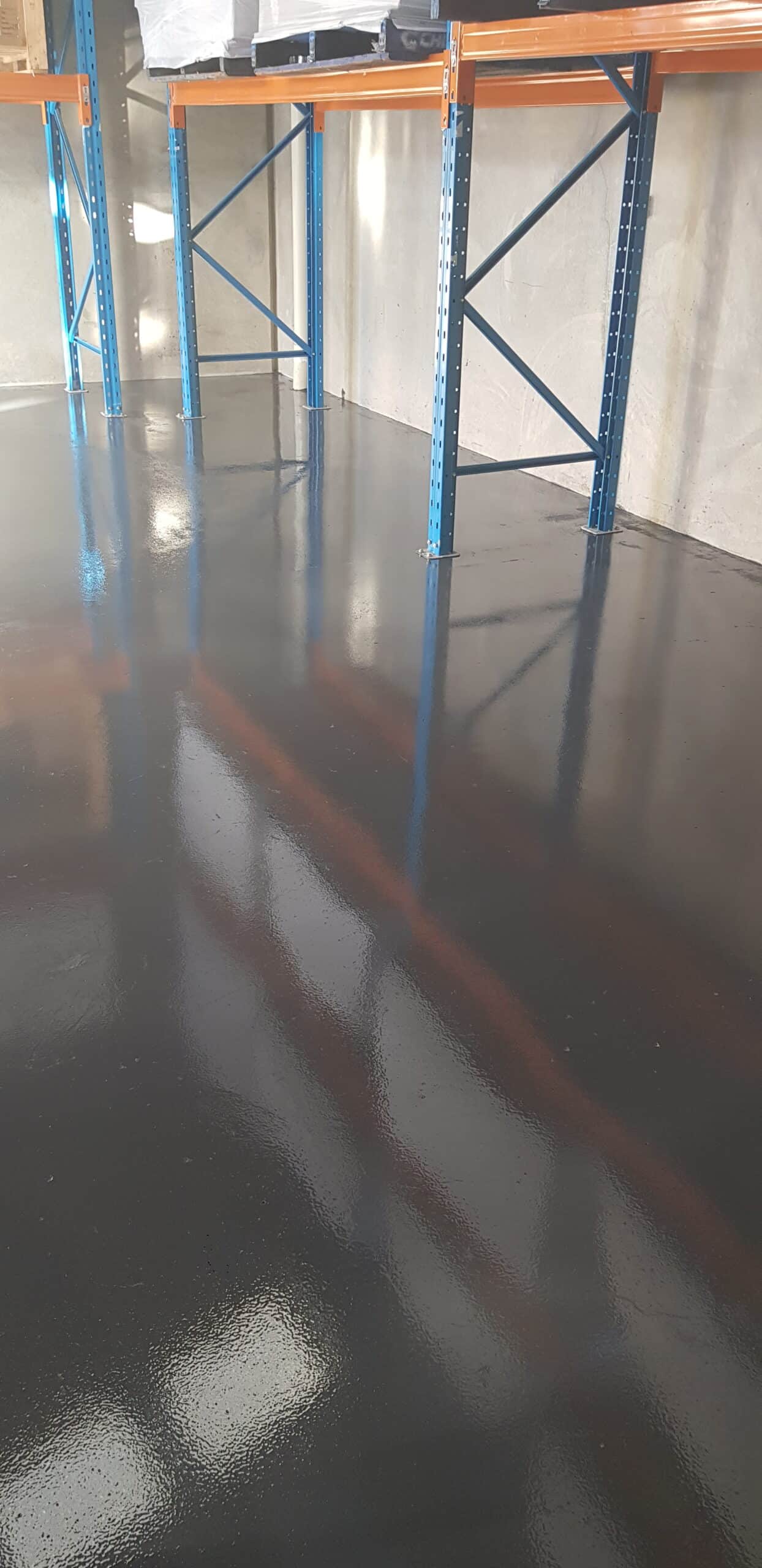
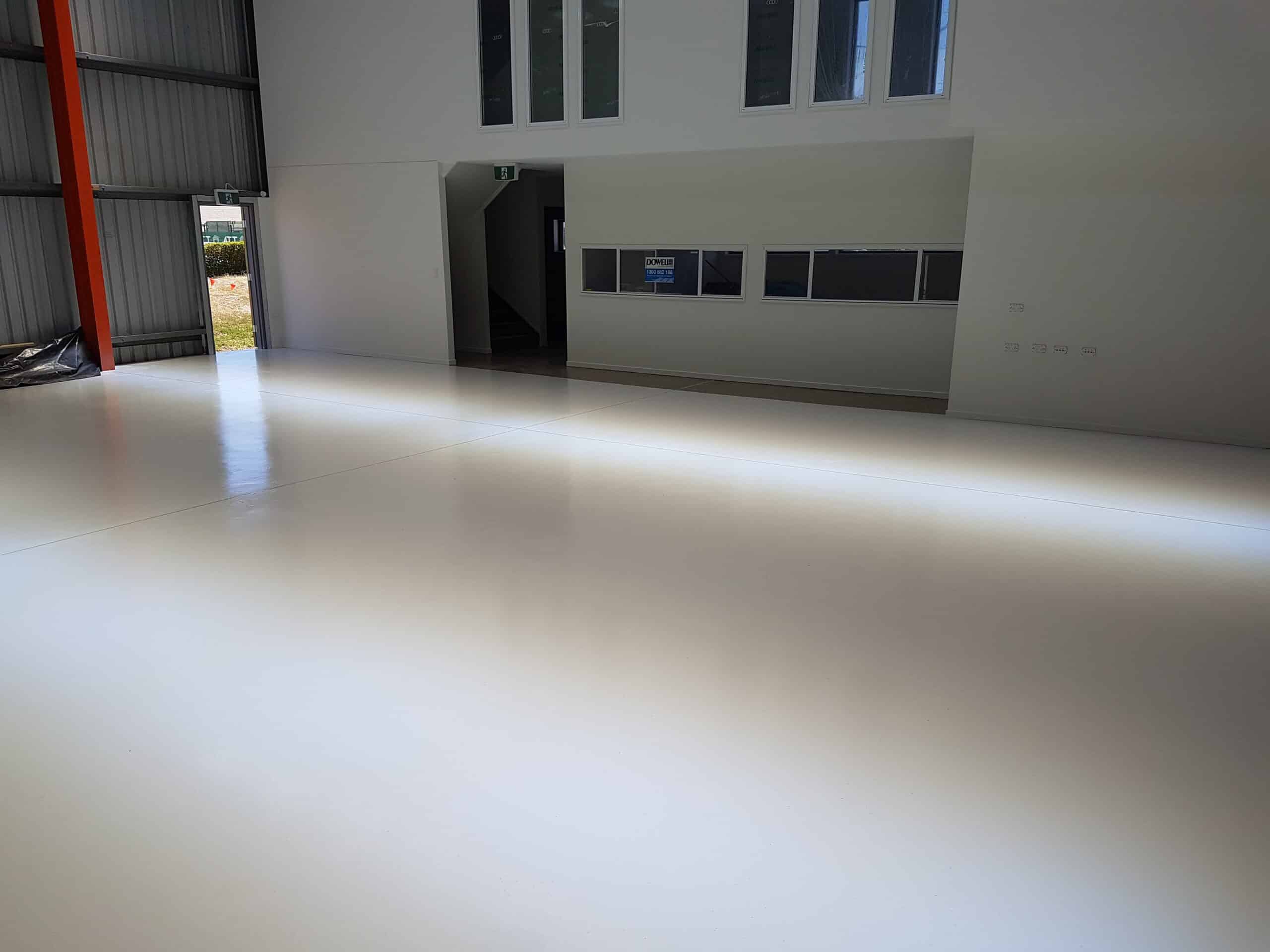
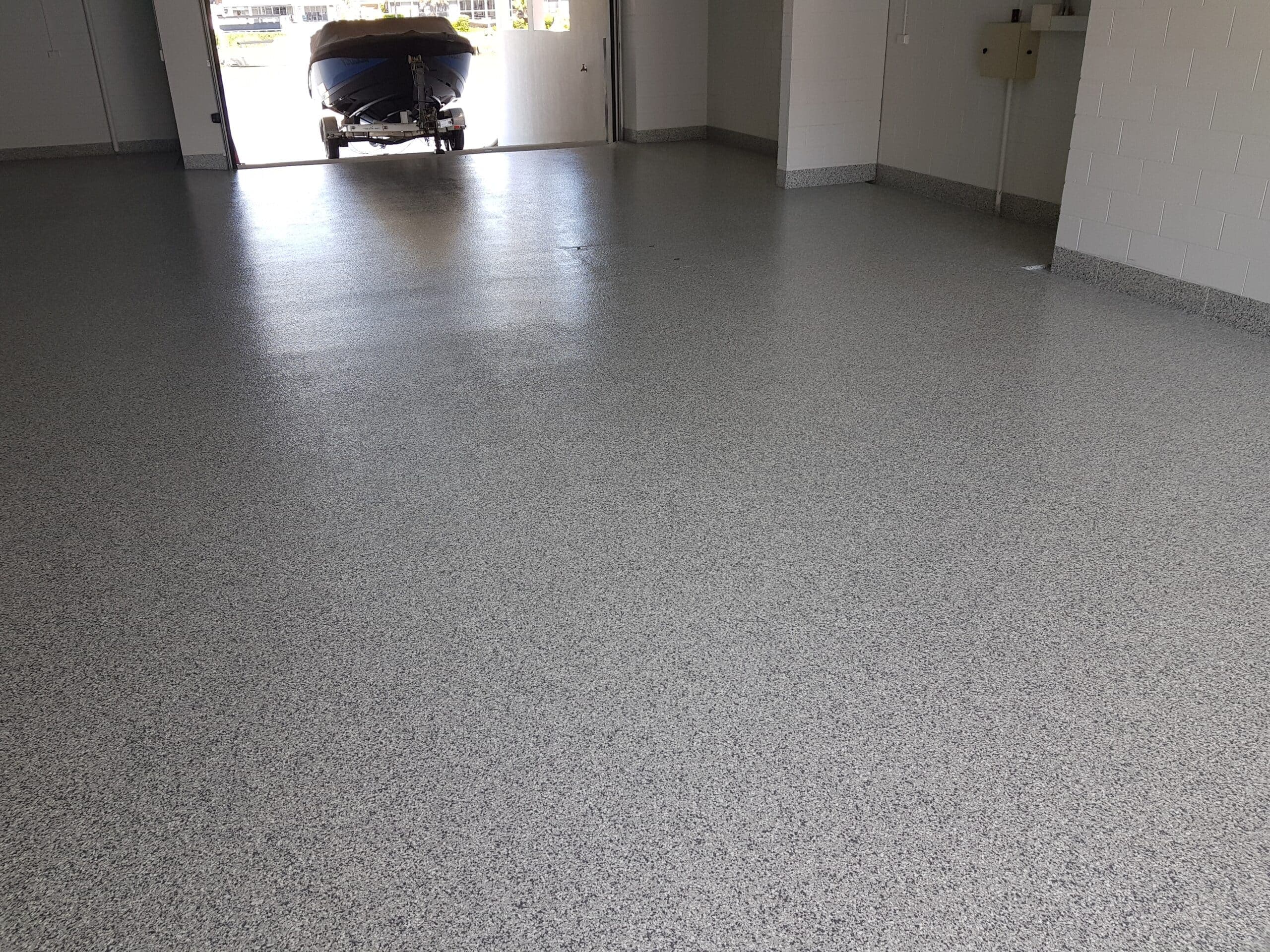
A commercial epoxy floor needs to suit the space that will use it. The right scope for a warehouse may not suit a workshop, retail tenancy, production area or premium garage.
Before comparing colours or headline rates, document how the floor will be used, what condition the slab is in and how much downtime the site can allow. Those details give flooring contractors a clearer basis for recommending a system and make competing quotes easier to compare.
Start with the work the floor needs to handle
“Commercial epoxy” describes a broad category, not one standard product. Begin with the operating conditions in the actual space.
Record:
- pedestrian, trolley, pallet jack, vehicle or forklift traffic
- equipment, racking or other concentrated loads
- water, oils, cleaning products or other substances likely to reach the floor
- wet areas, entries, ramps and other places where slip risk needs attention
- cleaning frequency and the way the floor is normally cleaned
- whether appearance, easy cleaning, line marking or visual zoning is important
This information helps the contractor discuss the coating build, finish and texture in relation to the site. It also reduces the risk of choosing a floor by appearance alone.
Check the slab before choosing the finish
The visible surface does not tell the whole story. Existing coatings, adhesives, contamination, cracks, joints, repairs and moisture can all change the preparation scope.
Useful information to provide with an enquiry includes:
- the building age, if known
- whether the slab is new or existing
- current floor coverings or coatings
- known leaks, damp areas or previous coating problems
- photographs of cracks, joints, damaged edges and high-wear areas
- any drawings or floor plans available
A contractor may need a site inspection or testing before confirming the final system. If a quote assumes a clean, sound slab without stating that assumption, ask what happens if site conditions differ.
Ask for the preparation method in writing
Total Grind N Polish’s published services include prep grinding, floor levelling, adhesive removal, joint sealing and other concrete flooring services used to prepare concrete for a new finish. The required combination depends on what is already on the floor and what will be installed next.
Ask each contractor to state:
- how existing coatings, adhesives or contamination will be addressed
- how the concrete will be mechanically prepared
- how cracks, joints and damaged areas will be treated
- whether moisture or adhesion testing is recommended
- how edges, corners and fixed equipment will be handled
- what happens if preparation reveals a different slab condition
Concrete grinding can generate respirable crystalline silica. Safe Work Australia identifies concrete as a common silica-containing material and says workplace hazards must be identified, assessed and controlled. The project’s dust-control and access plan therefore belongs in the scope, not as an assumption after work starts.
Match the finish to the site, not the brochure
Commercial epoxy floors can be specified with different colours, textures and system builds. Selection should follow the site requirements already documented.
Questions worth asking include:
- What finish is proposed for dry areas and wet or higher-risk areas?
- How will the proposed surface affect cleaning?
- Is line marking or colour zoning included?
- What product data will be supplied for the proposed system?
- What are the stated return-to-service stages for the nominated products?
- Are samples or a small test area appropriate before the full installation?
Avoid treating one generic answer as suitable for every part of a building. A customer-facing area, a loading zone and a wet work area may need different priorities even when they sit in the same facility.
Plan around access and downtime
Commercial flooring work affects more than the floor. Preparation, repairs, application and curing all need space and time.
Before requesting a programme, confirm:
- the area that can be cleared at one time
- operating hours and access restrictions
- whether the work must be staged
- other trades working nearby
- ventilation, noise and dust constraints
- pedestrian and vehicle separation during the work
- the date the floor is needed for normal use
Ask the contractor to separate preparation, application and return-to-service stages in the programme. Product data and site conditions should guide those timings. A single completion date without the assumptions behind it is difficult to plan around.
Compare quotes on the same basis
Two quotes can carry the same square metre figure while describing different work. A useful comparison should identify:
- the measured area and exclusions
- preparation and repair allowances
- the named coating system and proposed finish
- treatment of edges, joints and penetrations
- line marking or colour zoning
- site access and staging assumptions
- waste handling and clean-up
- product information and handover documents
Where one quote excludes an item that another includes, price is not the only difference. Ask for the scope to be clarified before selecting a contractor.
When another concrete finish may be worth comparing
Epoxy flooring is one option within a wider group of concrete flooring systems. Mechanically polished concrete, grind and seal, flake flooring and industrial coatings may also be considered, depending on the slab, location, appearance and operating needs.
The purpose of the comparison is not to find one finish that is best everywhere. It is to match the floor to the way the space will be used and maintained.
Prepare a clearer commercial flooring enquiry
Total Grind N Polish provides epoxy flooring, industrial coatings, polished concrete and related concrete flooring services across the Gold Coast, Brisbane and Northern New South Wales.
Contact Total Grind N Polish with the site location, approximate area, current floor condition, intended use, access constraints and preferred timing.