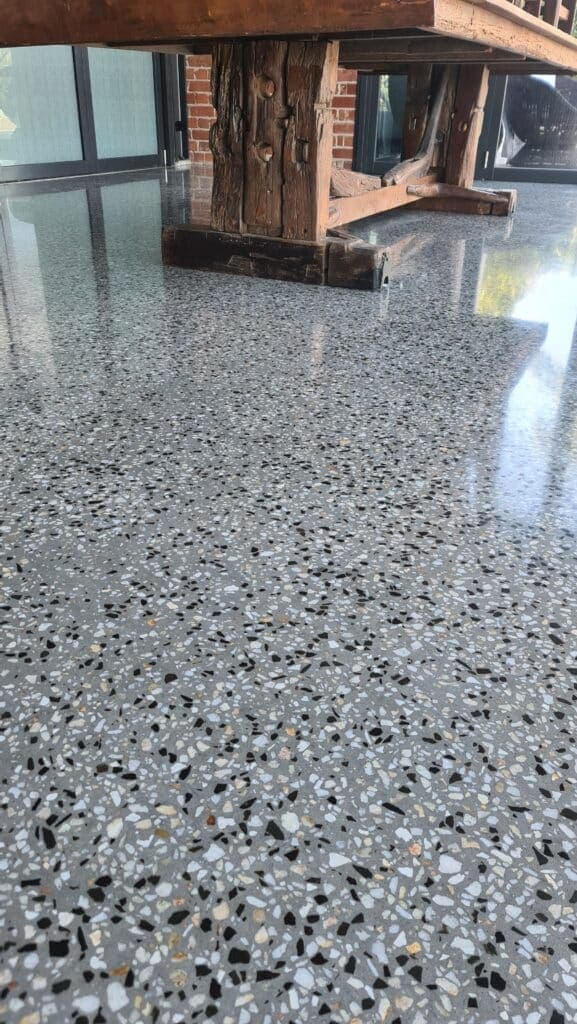
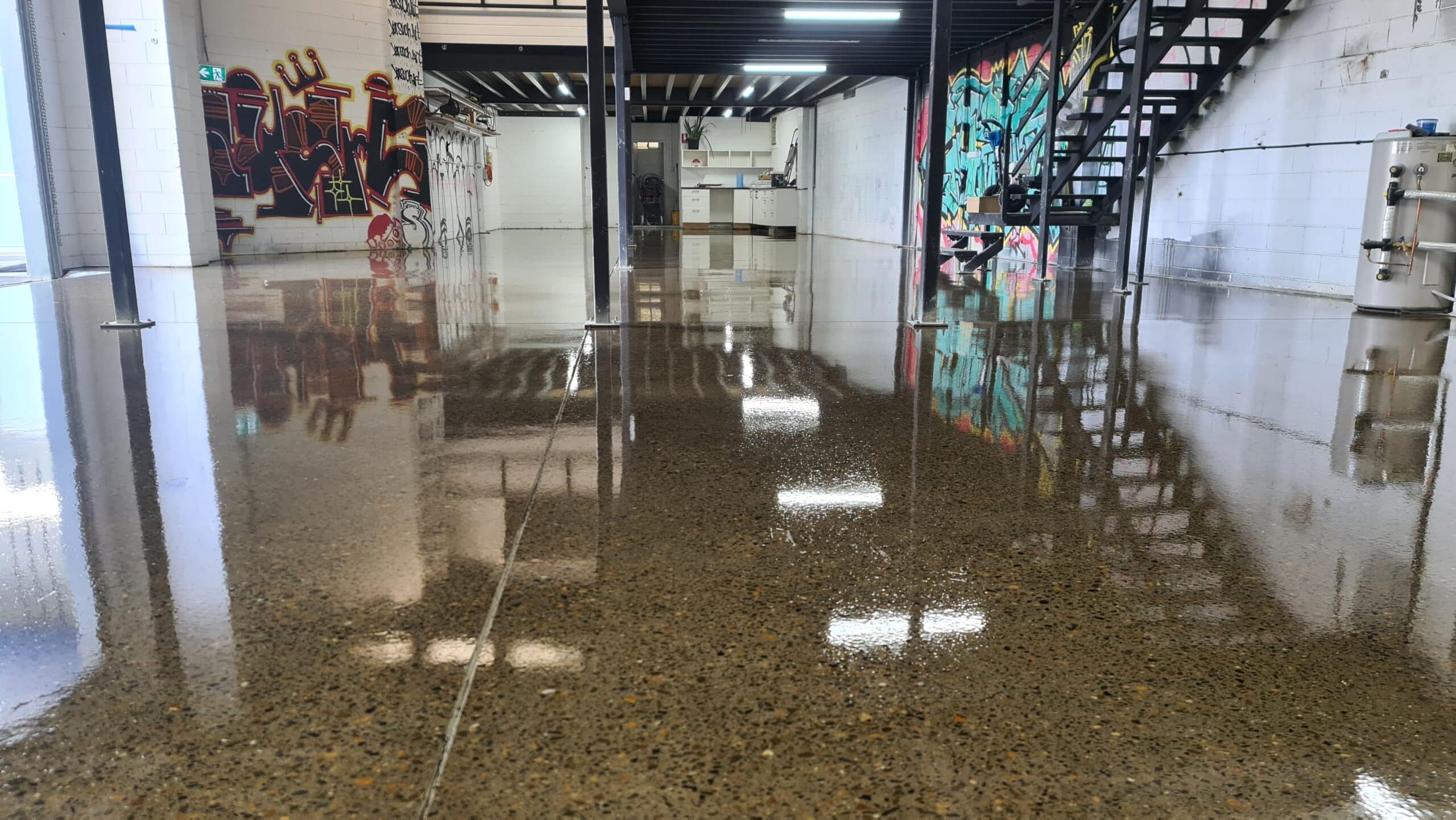
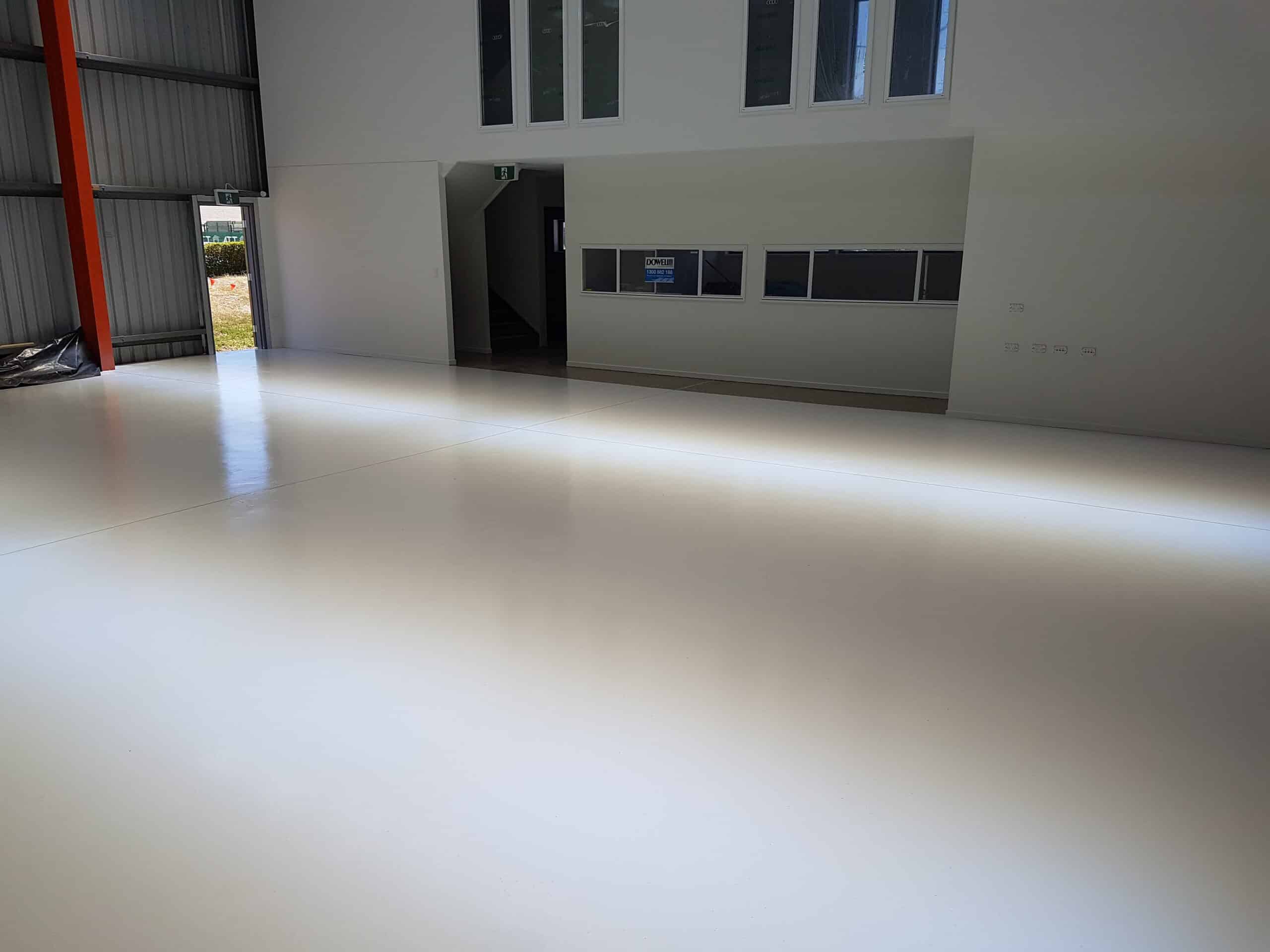
Grind and seal and mechanically polished concrete can produce a similar exposed-concrete look, but the systems create and protect that finish differently. The right choice depends on the slab, traffic, exposure, maintenance plan and required slip performance.
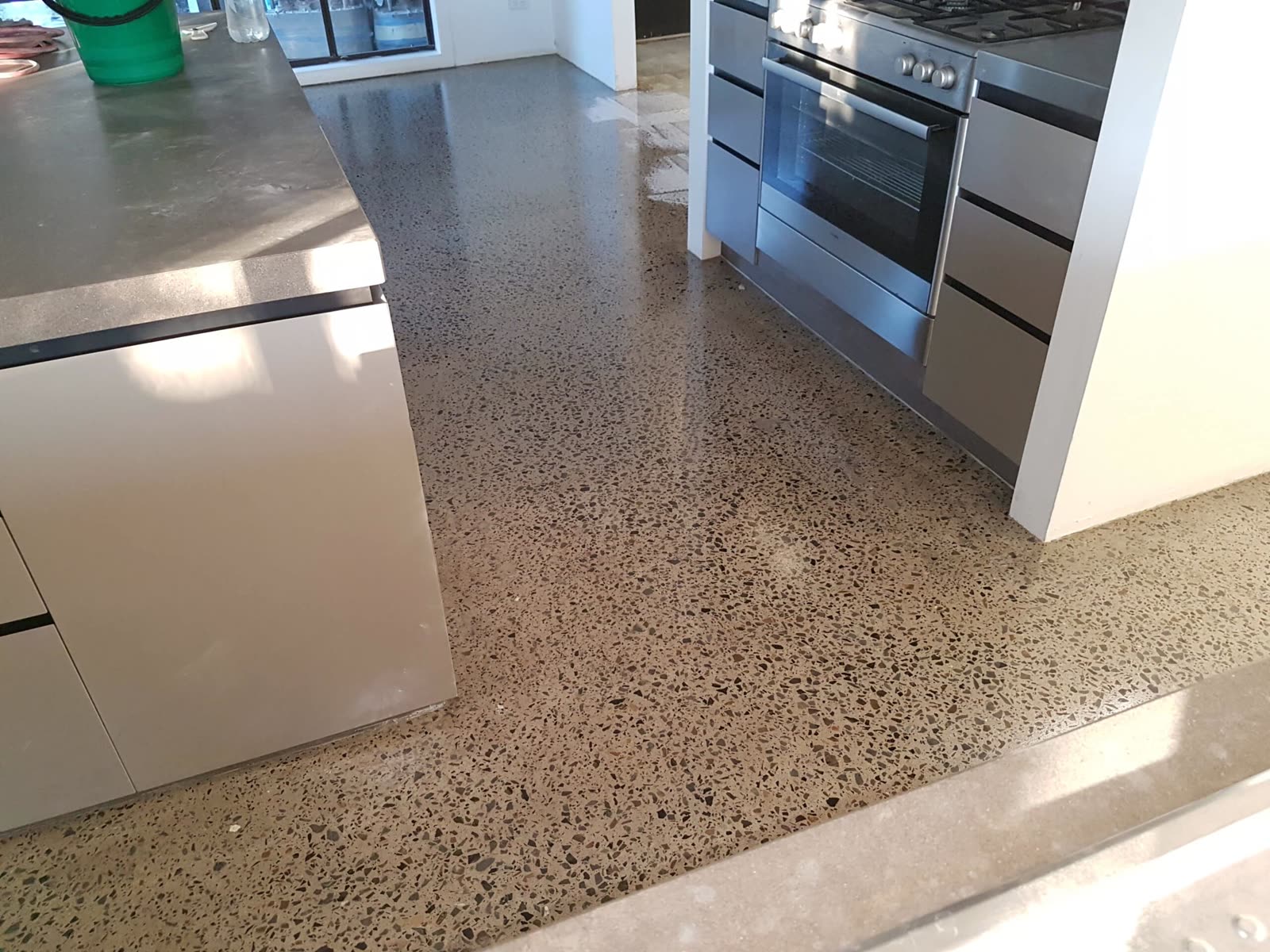
The core difference
Mechanically polished concrete is ground, densified and refined so the concrete itself carries the finish. There is no topical coating to renew.
Indoor grind and seal and outdoor grind and seal use diamond grinding to prepare and expose the slab, followed by a protective sealer. That sealer is part of the finished surface and is recoated when inspection shows wear.
Price and maintenance
Grind and seal usually involves fewer refinement stages. The actual price still depends on slab condition, area, access, repairs, aggregate exposure and finish.
Recoat timing depends on the installed sealer, traffic and exposure. A mechanically polished floor has no topical coating to renew, but it still needs the cleaning and maintenance specified for the facility. Compare written installation and maintenance scopes rather than relying on a fixed lifespan claim.
Slab condition
Mechanical polishing reveals the slab: aggregate, repairs, colour variation and existing defects remain part of the appearance. The slab's strength, moisture, coatings, joints and cracks are assessed before a polish is specified.
A grind-and-seal system may suit an older or repaired slab where a topical finish is appropriate. It is not a way to avoid preparation. Existing coatings, glue, contamination, cracks and uneven areas still need to be identified and treated.
Typical applications
Grind and seal is used for internal living areas, retail and hospitality floors, commercial fit-outs, driveways, paths, patios and pool surrounds. Outdoor work uses a UV-stable system and is finished for the required grip.
Mechanically polished concrete is used in homes, warehouses, logistics facilities, retail, showrooms, hospitality and offices. Exposure and gloss are selected for the slab and project.
Where chemical resistance, hygiene, washdown or a specified coating build is required, epoxy flooring or another resin system may be assessed instead.
Slip resistance and silica control
AS 4586 classifies new pedestrian surface materials. Specific NCC requirements depend on the building element and application, so the required classification and test should be stated in the project specification.
Both systems begin with concrete grinding. Safe Work Australia identifies concrete grinding and cutting as work that can generate respirable crystalline silica. Ask the contractor to document the dust-control method for the job.
Questions for the site assessment
- What is the slab strength and condition?
- Is the floor internal, external or exposed to regular water?
- What traffic, chemicals and cleaning does it need to handle?
- What aggregate exposure and sheen are required?
- Is a tested slip classification specified?
- How much downtime is available now and for future maintenance?
A sealed floor may be polishable later after the coating is removed, but that depends on slab strength, condition, contamination and the desired exposure.
Get a system recommendation
Read the relevant service page, then contact Total Grind N Polish with the location, approximate area and a few photos of the surface.